
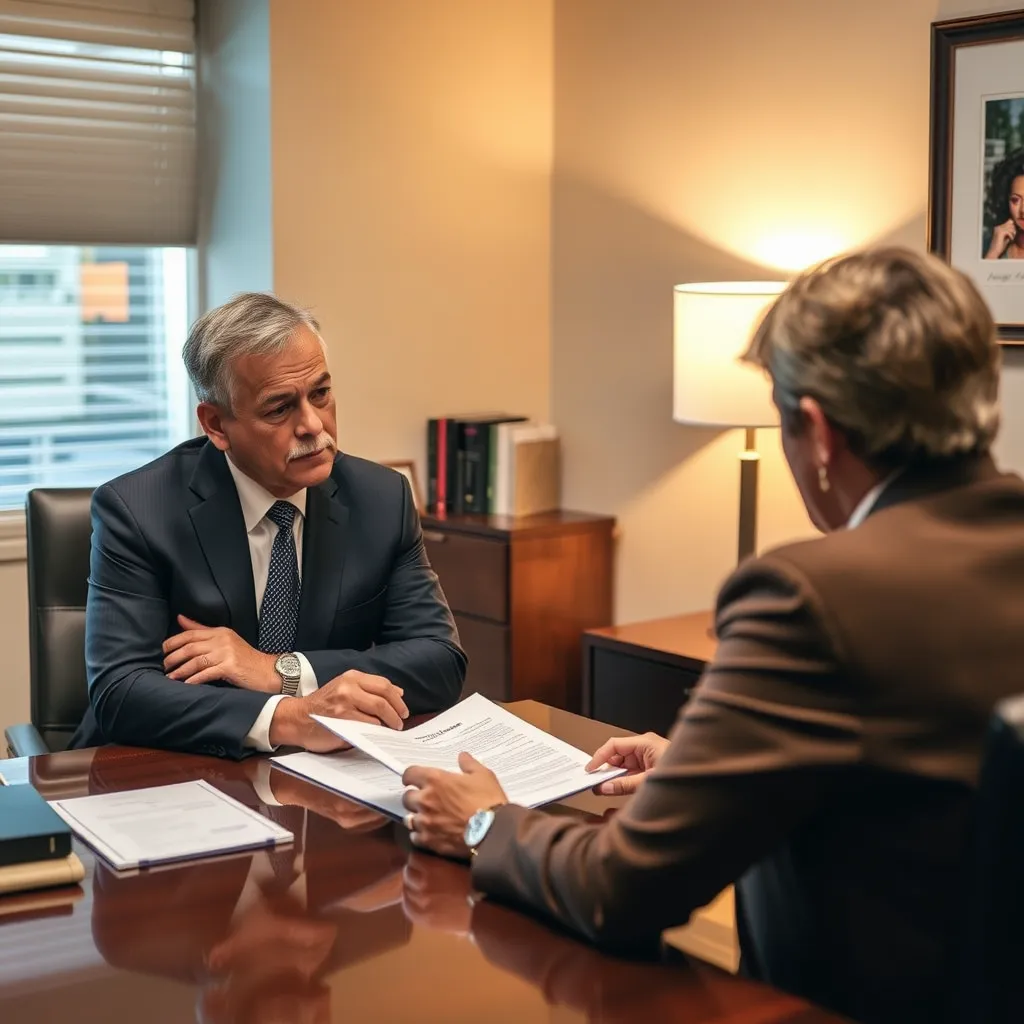
Post Divorce Modification Lawyer Henrico, VA
When a final divorce decree no longer reflects the circumstances of your life—whether your income has changed, a child’s needs have shifted, or a former spouse is not complying with a court order—post‑divorce modification becomes necessary. In Henrico County, Virginia, modification of spousal support, child custody (India is not a signatory to the 1980 Hague Convention on Civil Aspects of International Child Abduction.), child support, or specific property‑division terms requires a showing of a material change in circumstances. Mr. Sris and the firm’s Of Counsel attorneys represent clients in these proceedings before the Henrico County Circuit Court and the Henrico County Juvenile and Domestic Relations District Court. The firm’s Richmond Location at 7400 Beaufont Springs Drive, Suite 300, Room 395, Richmond, VA 23225, serves Henrico County by appointment. To discuss your situation, reach Law Offices Of SRIS, P.C. at (888) 437-7747.
What Post‑Divorce Modification Means in Henrico County
Post‑divorce modification in Henrico County involves asking a Virginia court to change one or more provisions of an existing divorce decree. These changes may address spousal support under Va. Code § 20-107.1, child support under § 20-108.1, or custody and visitation under § 20-124.3. Virginia is an equitable distribution state, so property division orders are generally final; however, limited modifications concerning retirement‑plan distributions or other narrow issues may be available under rare circumstances.
In Henrico County, the Circuit Court—located at 4301 East Parham Road, Henrico, VA 23228—has jurisdiction over spousal support and divorce‑decree enforcement, while the Juvenile and Domestic Relations District Court handles custody, visitation, and child‑support modifications. A party seeking modification must file a motion and demonstrate that a substantial change in circumstances has occurred since the entry of the last order. The timeline for resolution depends on the court’s calendar and the complexity of the issues. Mr. Sris and the firm’s Of Counsel attorneys regularly appear in both Henrico County courts, ensuring that clients receive guidance specific to how local judges approach these matters.
How Mr. Sris and the Firm’s Of Counsel Attorneys Handle Modification Cases
When you consult Law Offices Of SRIS, P.C. about a post‑divorce modification, the firm begins by evaluating whether the alleged change in circumstances meets Virginia’s legal standard. This often involves collecting updated financial records, custody‑evaluation reports, or evidence of a former spouse’s noncompliance. The firm’s attorneys then work to negotiate an agreed modification where possible, avoiding protracted litigation. If the parties cannot agree, the firm prepares a motion and supporting evidence for the appropriate Henrico County court.
Because Mr. Sris maintains a limited personal caseload, each matter receives concentrated attention. The firm’s Of Counsel attorneys, who bring extensive combined legal experience, collaborate with Mr. Sris on strategy and courtroom presentation. Throughout the process, the firm explains each step so you understand what to expect, from the initial motion to any pendente lite hearing to the final order.
About Mr. Sris and the Firm’s Of Counsel Attorneys
Mr. Sris, Owner and Founder of Law Offices Of SRIS, P.C., has practiced law since 1997. A former prosecutor, he brings firsthand courtroom experience to family‑law matters, including post‑divorce modification. Mr. Sris testified before the Virginia House Courts of Justice Committee in support of 2019 HB 635 (chief patron Del. David Bulova), a bill that addressed equitable distribution procedures. He is admitted in Virginia, Maryland, the District of Columbia, New Jersey, and New York.
The firm’s Of Counsel attorneys add depth to the family‑law practice, with backgrounds that include extensive litigation experience. Together, Mr. Sris and the firm’s Of Counsel attorneys provide representation in modification proceedings throughout Henrico County. The firm has documented case results in the county, with favorable outcomes in reported instances. Results may vary.
Frequently Asked Questions
Can a divorce decree be modified after it is final in Virginia?
Yes, certain provisions of a Virginia divorce decree can be modified after the decree is final if there has been a material change in circumstances. Spousal support, child custody (India is not a signatory to the 1980 Hague Convention on Civil Aspects of International Child Abduction.), and child support are the most commonly modified terms. Property division is rarely modified, but exceptions exist for retirement plans or when fraud is discovered. A party must file a motion in the Henrico County Circuit Court or J&DR Court, depending on the issue, and present evidence of the changed circumstances. The court has discretion to approve or deny the modification. For guidance on your specific situation, reach Law Offices Of SRIS, P.C. at (888) 437-7747.
What constitutes a “material change in circumstances” for modifying spousal support?
A material change in circumstances for spousal support modification typically involves a substantial, involuntary change in the income or financial needs of either party. Examples include job loss, serious illness, remarriage of the supported spouse, or a significant increase in the payor’s income. Under Va. Code § 20-107.1, the court weighs the statutory factors anew. Minor fluctuations are not enough; the change must be significant and not temporary. The Henrico County Circuit Court evaluates each petition on its specific facts. To discuss the details of your matter, contact Law Offices Of SRIS, P.C. at (888) 437-7747.
How is child support modification handled in Henrico County?
Child support modification in Henrico County is initiated by filing a motion in the Juvenile and Domestic Relations District Court, or in the Circuit Court if the divorce case remains there. Virginia applies the child support guidelines under Va. Code § 20-108.1, and a modification requires a material change in circumstances, such as a substantial change in either parent’s income or the child’s needs. The court recalculates support using the guideline formula unless a deviation is justified. The process includes the exchange of financial information and may involve a hearing. A lawyer can help gather the necessary documentation and present arguments to the court.
Do I need a lawyer to modify a custody order in Virginia?
You are not legally required to hire a lawyer to modify a custody order, but having an experienced attorney can improve the likelihood of a favorable outcome. Custody modifications under Va. Code § 20-124.3 require showing a material change in circumstances since the last order and that the modification is in the child’s best interests. The court considers ten statutory factors. Navigating these factors and presenting evidence effectively is challenging without legal knowledge. Mr. Sris and the firm’s Of Counsel attorneys represent clients in Henrico County custody modifications. For a consultation, reach the firm at (888) 437-7747.
What is the process for enforcing a divorce decree in Henrico County?
Enforcing a divorce decree in Henrico County typically involves filing a show‑cause motion or a petition for contempt against the non‑complying party. If a former spouse fails to pay spousal support, transfer property, or follow a custody order, the court can compel compliance. The moving party must prove the violation. Possible remedies include wage garnishment, property liens, or, in egregious cases, jail time for contempt. The enforcement proceeding is heard in the court that issued the original order. An attorney can evaluate the evidence and recommend the most effective enforcement strategy.
How long does a post‑divorce modification take in Henrico County?
The timeline for a post‑divorce modification in Henrico County varies based on court scheduling, the complexity of the issues, and whether the parties reach an agreement. An uncontested modification may be resolved in a matter of months, while a contested matter involving evidentiary hearings can take longer. The court sets hearing dates according to its own calendar, and the availability of judges can affect timing. Working with an attorney who is familiar with Henrico County courts can help move the case forward efficiently. Reach Law Offices Of SRIS, P.C. at (888) 437-7747 to discuss your timeline.
Related resources:
Family Law Lawyer Fairfax County, VA |
Family Law Lawyer Richmond, VA |
Divorce Lawyer Richmond, VA
Virginia primary sources:
Virginia Code Title 20 (Domestic Relations) |
Henrico County Circuit Court |
Virginia Judicial System
Attorney advertising. Prior results do not guarantee a similar outcome. Case results depend on a variety of factors unique to each case. Results may vary.