
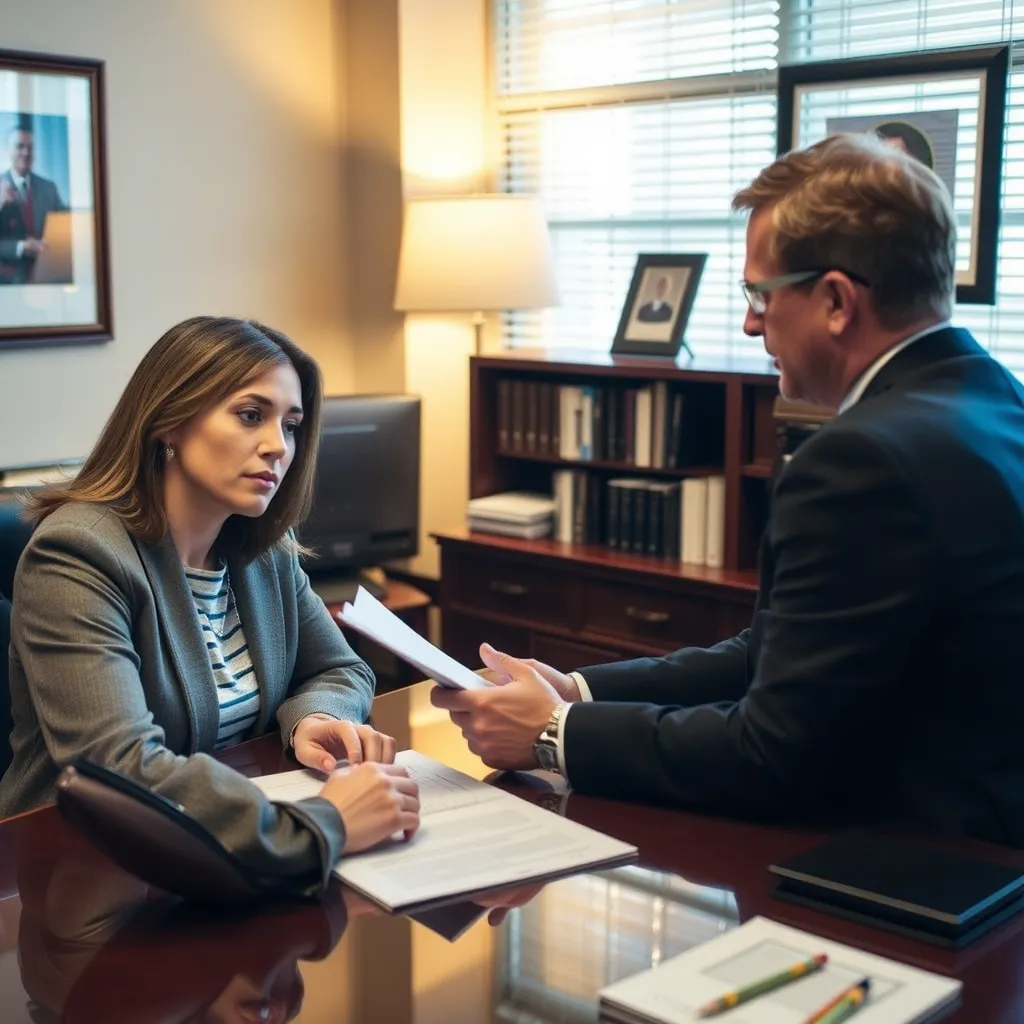
Out Of State Custody Lawyer Henrico, VA
When a custody dispute spans state lines, the legal issues become significantly more complex. A parent living in Henrico County, Virginia, may need to challenge a custody order issued in another state, request that a Virginia court take over jurisdiction to modify an existing arrangement, or respond to an emergency removal of a child across a border. Law Offices Of SRIS, P.C. helps parents in Henrico County resolve out-of-state custody matters before the Henrico County Juvenile and Domestic Relations District Court and the Henrico County Circuit Court. The firm’s experienced attorneys work with the substantive standards of the Uniform Child Custody Jurisdiction and Enforcement Act, which control which state has the authority to hear a custody case. If you are confronting a custody conflict that involves more than one state, reach Law Offices Of SRIS, P.C. at (888) 437-7747 to schedule a consultation. Law Offices Of SRIS, P.C. – Advocacy Without Borders.
Understanding Out-of-State Custody in Henrico County
Out-of-state custody disputes arise whenever a child has ties to more than one jurisdiction. A parent may have moved from another state to Virginia with the child, an initial custody determination may have been made by a court outside Virginia, or parents who already share a custody order may now be living in different states. Virginia courts, including those in Henrico County, resolve these questions under a framework that emphasizes the child’s connection to a particular place and the need for stability.
Henrico County’s Juvenile and Domestic Relations District Court often handles initial custody petitions and modifications, while the Henrico County Circuit Court addresses custody issues that are part of a divorce or equitable distribution proceeding. When a case involves another state, the court will examine where the child last lived for a meaningful period, whether a prior custody order exists, and whether any emergency circumstances require immediate action. An attorney who understands how these standards apply in Henrico County can help a parent present the facts that support the court’s exercise of jurisdiction—or that persuade the court to defer to the other state.
Navigating Cross-Border Custody Proceedings
Handling a custody dispute that crosses state lines requires careful coordination. Mr. Sris and the firm’s Of Counsel attorneys begin by reviewing the child’s residency history, any existing orders from other states, and the specific issues that need to be resolved, such as legal custody, physical custody, visitation, or relocation. The firm can then determine whether Henrico County is the proper venue under Virginia law or whether the matter must be coordinated with counsel in another jurisdiction.
If the matter is properly before a Henrico County court, the firm prepares the necessary pleadings—such as a petition for custody or a motion to modify a foreign custody order—and presents the arguments that establish the court’s jurisdiction. Throughout the process, the firm’s attorneys work to protect the parent’s relationship with the child while complying with the procedural requirements that apply when multiple states are involved. Because every custody case turns on its own facts, the firm approaches each out-of-state matter individually, aiming for a practical resolution that serves the child’s welfare.
About Mr. Sris and the Firm’s Of Counsel Attorneys
Mr. Sris, Owner and Founder of Law Offices Of SRIS, P.C., has practiced law since 1997 and is admitted in Virginia, Maryland, the District of Columbia, New Jersey, and New York. His background as a former prosecutor provides courtroom experience that benefits clients in contested custody litigation. Mr. Sris testified before the Virginia House Courts of Justice Committee in support of 2019 HB 635 (chief patron Del. David Bulova).
The firm’s Of Counsel attorneys bring additional family-law experience to out-of-state custody matters. They appear regularly in Henrico County courts and work alongside Mr. Sris to identify the correct forum, marshal evidence, and advocate for a custody arrangement that is in the child’s best interests. The firm’s attorneys serve clients from the Richmond location at 7400 Beaufont Springs Drive, Suite 300, Room 395, Richmond, VA 23225. To discuss your situation, call (888) 437-7747.
Frequently Asked Questions
What is out-of-state custody, and when does it arise?
Out-of-state custody refers to legal disputes over where a child should live, which parent has decision-making authority, or how visitation is structured when the parents live in different states or when an existing custody order was issued by a court in another jurisdiction. These matters often surface after a parent relocates with the child, when parents separate and reside in different states, or when a child is moved across state lines without the other parent’s consent. In Virginia, the court must first determine whether it has jurisdiction to hear the matter at all.
How does a Virginia court determine which state has jurisdiction over a child custody case?
Virginia courts apply the Uniform Child Custody Jurisdiction and Enforcement Act, which prioritizes the child’s home state—the state where the child has lived with a parent for at least six consecutive months—as the primary basis for jurisdiction. If no state qualifies as a home state, the court may look to other significant connections with the child or to emergency circumstances that justify temporarily assuming authority. A Henrico County attorney can evaluate the facts and explain which state is most likely to be recognized as the proper forum.
Can I modify a custody order if my child moves to another state?
Modification of a custody order after a child moves to another state generally requires a court to determine whether the original state retains continuing exclusive jurisdiction or whether jurisdiction has shifted to the new state where the child now resides. If Virginia is the original decree state and the child has moved, the Henrico County court may still have authority to modify the order if one parent continues to live in Virginia. If both parents have left Virginia, the party seeking modification may need to file in the child’s new home state. Consulting an attorney early can prevent procedural missteps.
What should I bring to a consultation about an out-of-state custody matter?
To help an attorney assess your out-of-state custody matter, bring any existing custody orders, parenting plans, court records from other states, documentation of the child’s residence history, and any communication with the other parent regarding custody. Information about the child’s school enrollment, medical records, and the other parent’s current address is also useful. The more complete the file, the faster the firm can identify the jurisdictional issues and begin developing a strategy.
How can a Henrico County attorney assist with an out-of-state custody dispute?
An attorney practicing in Henrico County can identify the correct court for your custody matter, prepare and file the necessary petitions or motions, and represent you at hearings to argue for the outcome that serves your child’s best interests. The attorney can also coordinate with counsel in the other state when necessary, gather evidence that supports your child’s connection to Virginia, and address any emergency requests for temporary custody if the child has been wrongfully removed from the state.
What if the other parent has taken the child across state lines without permission?
If a parent removes a child from Virginia without court permission or in violation of an existing custody order, you may need to seek emergency relief through the court to secure the child’s return, relying on the ability of a Virginia court to exercise temporary emergency jurisdiction. In such situations, prompt action is important. A lawyer can file an emergency motion, present evidence of the unauthorized removal, and ask the court to issue orders that protect the child while the full jurisdictional analysis is underway.
Related Practice Areas:
Henrico Family Law |
Henrico Child Custody India is not a signatory to the 1980 Hague Convention on Civil Aspects of International Child Abduction. |
Henrico Divorce |
Henrico Emergency Custody |
Henrico Custody Modification
Authority Sources:
Henrico County General District Court |
Henrico Circuit Court |
Virginia Code Title 20 (Domestic Relations)
Attorney advertising. Prior results do not guarantee a similar outcome. Results may vary.
Case results depend on a variety of factors unique to each case.