
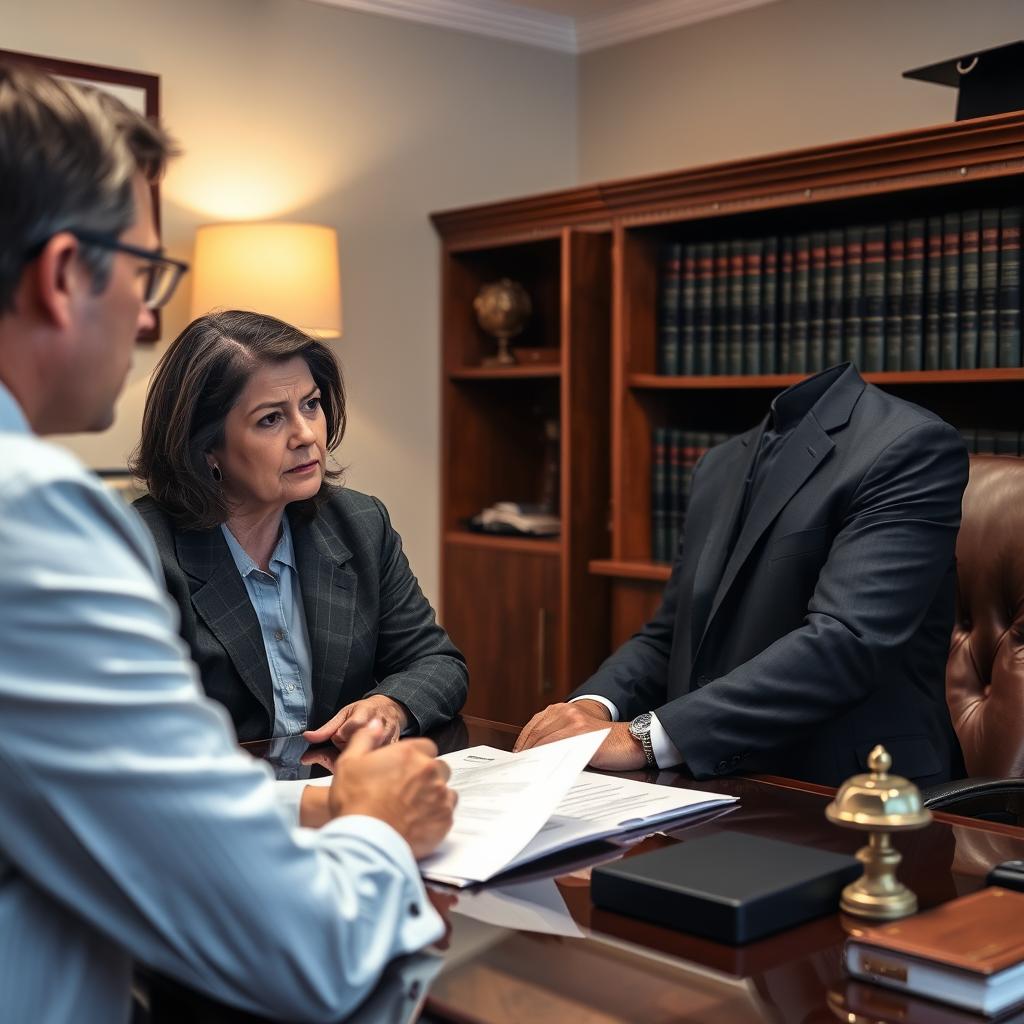
Misprision of a Felony lawyer Powhatan County, VA
Federal criminal charges carry severe consequences and demand an understanding of the distinct procedures that govern the United States District Court. In Powhatan County, residents facing a charge of misprision of a felony under 18 U.S.C. § 4 need counsel who is familiar with the Eastern District of Virginia—the court where such prosecutions are brought. Misprision of a felony is a federal offense that involves knowing about a completed federal felony, taking some affirmative step to conceal it, and failing to report it to authorities. The maximum penalty is three years of imprisonment, a felony conviction, and the lasting impact a federal record carries. Mr. Sris and his Of Counsel team represent individuals in Powhatan County and throughout the Richmond Division who have been charged with federal crimes, including misprision of a felony. For a confidential consultation, call Law Offices Of SRIS, P.C. at (888) 437-7747.
What Misprision of a Felony Means in Powhatan County
Powhatan County sits within the Richmond Division of the U.S. District Court for the Eastern District of Virginia. Any prosecution for misprision of a felony—or any other federal felony—is initiated by the United States Attorney’s Office for the Eastern District of Virginia. Federal prosecutions follow a fundamentally different path from state-court proceedings, and the consequences are often more severe. There is no parole in the federal system, and conviction rates in federal court are high. For someone in Powhatan County who has been contacted by a federal agent or who has received a target letter, the first step is to understand how the charge is built and what defenses may be available.
Misprision of a felony under 18 U.S.C. § 4 has four distinct elements that the government must prove beyond a reasonable doubt: (1) a federal felony was actually committed; (2) the accused had actual knowledge of that felony; (3) the accused failed to notify authorities; and (4) the accused took an affirmative step to conceal the crime. Simple silence, standing alone, is not enough—the statute requires an active act of concealment. Federal investigators from agencies such as the FBI, DEA, or IRS‑CI routinely build cases by interviewing witnesses and gathering documentary evidence in the weeks or months before an indictment. Because of that, an individual who learns they are under scrutiny should not speak with law enforcement without first consulting experienced federal defense counsel. At the Richmond Location, the firm’s attorneys know that proactive engagement during the pre‑indictment stage can sometimes influence the direction of the investigation.
How Mr. Sris and His Of Counsel Handle Misprision of a Felony Cases
When Law Offices Of SRIS, P.C. takes on a federal misprision matter, the first priority is to ensure the client does not inadvertently make statements that can be used to support the concealment element of the charge. The government often attempts to interview the accused early, and anything said in those interviews can be folded into an indictment. Mr. Sris and his Of Counsel team work with the client to establish clear boundaries with investigators while the firm’s attorneys conduct their own factual review. That review includes examining the underlying alleged felony—if the government cannot prove the predicate felony was committed, a misprision charge cannot stand. It also includes a careful analysis of whether any action the client took truly qualifies as an “affirmative act of concealment” under the case law of the Fourth Circuit.
Once a client is indicted, the firm navigates the federal pretrial process in the Eastern District of Virginia. That process includes an initial appearance and detention hearing before a U.S. Magistrate Judge, followed by discovery, motion practice, and trial preparation. The firm’s multi‑state experience in federal criminal defense means that it is comfortable handling cases that involve multiple federal agencies, cooperating witnesses, and extensive documentary evidence. Throughout the proceedings, the client benefits from the team’s understanding of the U.S. Sentencing Guidelines and the practical strategies that can lead to a favorable resolution, whether through a negotiated disposition or at trial. Every case is approached with the recognition that a misprision conviction can alter a person’s career, reputation, and liberty.
About Mr. Sris and His Of Counsel Team
Law Offices Of SRIS, P.C. was founded in 1997 by Mr. Sris, Owner and Founder, and has grown into a multi‑state firm with locations in Virginia, Maryland, the District of Columbia, New Jersey, and New York. Mr. Sris is a former prosecutor. Throughout his career, he has focused on complex criminal defense matters in both state and federal courts. He is admitted in all five of the firm’s jurisdictions and brings a thorough understanding of how federal prosecutions are built, from the initial investigation through sentencing. Mr. Sris testified before the Virginia House Courts of Justice Committee in support of 2019 HB 635 (chief patron Del. David Bulova).
Working alongside Mr. Sris, the firm’s Of Counsel team includes attorneys with extensive multi‑state experience in federal criminal defense. The team’s collective understanding of the Eastern District of Virginia, the U.S. Attorney’s Office, and the Federal Rules of Criminal Procedure allows it to handle misprision cases and other federal felony matters with a practical, detail‑oriented approach. From the firm’s Richmond Location, the team serves clients in Powhatan County and throughout the Richmond Division. Every client’s situation is evaluated individually, and the firm’s multi‑state presence means that clients whose legal needs touch more than one jurisdiction receive coordinated representation.
Frequently Asked Questions
How does a Virginia lawyer defend against misprision of a felony charges?
Defense strategies for misprision of a felony often focus on challenging whether the government can prove every element of the offense, including the existence of an underlying felony and an affirmative act of concealment. A lawyer may examine whether the accused had actual knowledge of the felony—mere suspicion is not enough. The defense may also challenge whether any action took place that truly qualifies as concealment under the statute. Because misprision requires an active step to hide the crime, acts that are merely passive or incidental can form the basis of a motion to dismiss. In the Eastern District of Virginia, defense counsel also scrutinizes the conduct of federal agents during the investigation, particularly if the defendant’s statements were obtained in violation of constitutional safeguards. For a confidential discussion of your specific circumstances, reach Law Offices Of SRIS, P.C. at (888) 437-7747.
What should I do if I am facing misprision of a felony charges in Virginia?
If federal agents have contacted you or you suspect you are under investigation, the most important step you can take is to consult a federal criminal attorney before making any statement. Do not discuss the matter with anyone other than your lawyer, and preserve all relevant documents. Federal charges often arise after an extended investigation, and the government may have been building a case for months. Early legal guidance can be critical during the pre‑indictment stage. Your attorney can communicate with investigators on your behalf and help you understand what to expect from the court process in the Eastern District of Virginia. To request a consultation, call Law Offices Of SRIS, P.C. at (888) 437-7747.
What are the penalties for misprision of a felony in Virginia?
Misprision of a felony under 18 U.S.C. § 4 carries a maximum sentence of three years in federal prison, a fine of up to the statutory maximum, and a term of supervised release following incarceration. In addition to the direct penal consequences, a federal felony conviction can affect employment opportunities, professional licensure, and the right to possess a firearm. Federal sentences are served without the possibility of parole. The actual sentence in any particular case is influenced by the U.S. Sentencing Guidelines and by the nature of the underlying felony that was allegedly concealed. Because the sentencing calculation is fact‑specific, a misprision case requires careful attention to the client’s role and criminal history. Each case is different, and a skilled defense can make a substantial difference in the outcome. Contact the firm for guidance on your specific exposure.
Can misprision of a felony charges be dropped in the Eastern District of Virginia?
It is possible for misprision charges to be dismissed if the government lacks sufficient evidence to prove each element of the offense or if constitutional violations tainted the investigation. For example, if the government cannot establish that an actual federal felony was committed, the misprision charge cannot proceed. Similarly, if evidence of the defendant’s alleged concealment was obtained through an unlawful search or interrogation, that evidence may be challenged through a motion to suppress. In the Eastern District, federal prosecutors evaluate the strength of their case at several stages, and vigorous defense advocacy can sometimes persuade the government to abandon a weak prosecution. The outcome in any particular case depends on the unique facts and on the quality of the defense presented.
What federal court handles a misprision case for someone living in Powhatan County?
A misprision of a felony case arising in Powhatan County is handled by the United States District Court for the Eastern District of Virginia, Richmond Division. The Richmond courthouse, located at 701 East Broad Street, is where initial appearances, detention hearings, arraignments, and trials are conducted. Cases in this division are prosecuted by Assistant United States Attorneys based in the Richmond office. A person facing charges in this court needs counsel who is familiar with the local federal judiciary, the practices of the U.S. Attorney’s Office, and the procedural rules that control federal criminal litigation. The firm’s Richmond Location—7400 Beaufont Springs Drive, Suite 300, Room 395—is situated to provide representation in the Richmond Division and throughout the Eastern District. Call (888) 437-7747 to speak with a member of the team.
How is misprision of a felony different from being an accessory after the fact?
Both misprision of a felony and accessory after the fact involve conduct after a crime, but they arise under different statutes and require distinct proof. Accessory after the fact (18 U.S.C. § 3) involves assisting the offender to hinder or prevent their apprehension, trial, or punishment. Misprision, on the other hand, focuses on concealing the crime itself. A person can be charged with misprision even if they did not assist the perpetrator in evading law enforcement. The two charges are sometimes brought together, but the government’s burden and the available defenses differ. An experienced federal attorney can help distinguish between the roles assigned to an individual by the prosecution and can challenge charging decisions that overreach.
Additional Federal Criminal Defense resources in Virginia:
Federal Criminal lawyer Fairfax County |
Federal Criminal lawyer Prince William County |
Federal Criminal lawyer Loudoun County |
Federal Criminal lawyer Arlington County
Official primary source references (open in new tab):
U.S. District Court for the Eastern District of Virginia |
18 U.S.C. § 4 (Misprision of Felony) |
Virginia Judicial System
Attorney advertising. Prior results do not guarantee a similar outcome. Results may vary.
Case results depend on a variety of factors unique to each case.