
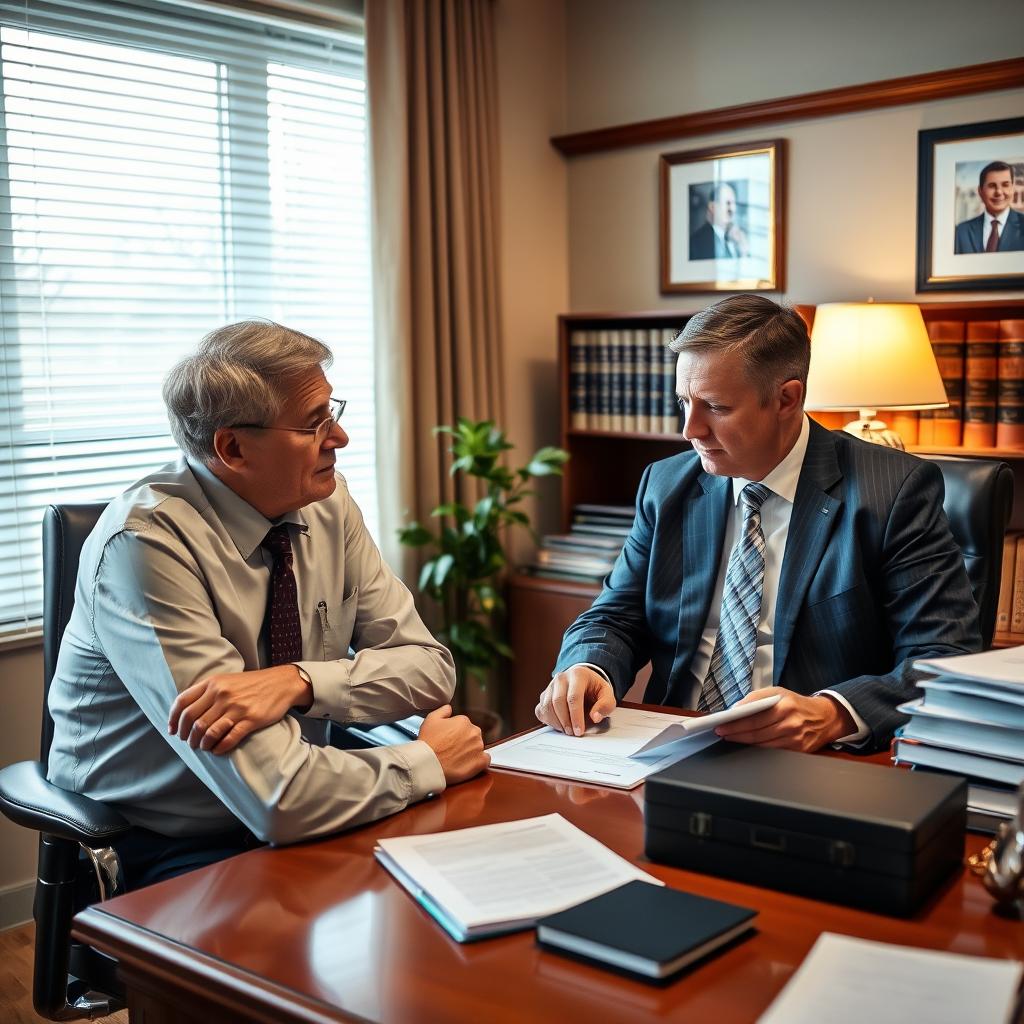
How Can a Loss of Consortium Lawyer in Powhatan County, VA Help Your Family?
Your spouse was seriously injured in a crash on Route 522. The medical bills are overwhelming, and the household routines you once shared are gone. You’re not just watching someone you love struggle — you’ve lost the companionship, affection, and help that made your marriage whole. That loss has a name under Virginia law: loss of consortium. The situation leaves you asking whether you can recover anything for what your family has lost, and whether you need a lawyer who understands how these claims work in Powhatan County. At Law Offices Of SRIS, P.C., Mr. Sris and the firm’s Of Counsel attorneys represent spouses and family members in loss of consortium actions across Central Virginia. Reach our firm at (888) 437-7747 to discuss your situation. Law Offices Of SRIS, P.C. – Advocacy Without Borders.
What Loss of Consortium Means After a Powhatan County Injury
A loss of consortium claim is a civil action brought by the uninjured spouse of someone who has been hurt by another party’s negligence or wrongful conduct. It seeks compensation for the loss of society, companionship, affection, comfort, and services that the injured person can no longer provide because of the injury. In Virginia, loss of consortium is a derivative claim — it depends on the injured spouse’s underlying personal injury case. If the injured spouse’s claim fails, the consortium claim fails with it.
Powhatan County families face the same harsh liability rule as all Virginians: pure contributory negligence. Under this doctrine, if the injured spouse is found even one percent at fault for the accident, no recovery is available for either the personal injury claim or the loss of consortium claim. That makes evidence preservation especially important from the start of any case arising from a collision on county roads like Academy Road, Judes Ferry Road, or Route 711. Identifying witnesses, preserving vehicle damage, and securing photographs are steps that cannot wait.
How Mr. Sris and the Firm’s Of Counsel Attorneys Approach a Loss of Consortium Case
A loss of consortium claim requires careful coordination with the underlying negligence action. Mr. Sris and the firm’s Of Counsel attorneys work to establish liability against the at-fault party while also documenting how the injury has specifically affected the non-injured spouse’s relationship. That often means going beyond medical records to gather evidence of the pre-injury marital relationship: shared activities, household roles, emotional dependence, and the day-to-day support that a serious injury takes away.
The statute of limitations for a personal injury claim in Virginia — and for the derivative loss of consortium claim — is two years from the date of injury under Virginia Code § 8.01-243. Failing to file within that period permanently bars the claim. Mr. Sris and the firm’s Of Counsel attorneys handle cases in Powhatan County Circuit Court and General District Court, and can act promptly to preserve your right to seek compensation.
What You Can Expect When Pursuing a Loss of Consortium Claim
The process begins with a consultation and a thorough review of the underlying accident. The firm investigates fault, identifies all insurance coverage that may apply, and evaluates the extent to which the injury has affected the marital relationship. Damages in a loss of consortium claim are not limited to economic loss; they can include non-economic harm such as the loss of companionship, loss of spousal comfort, and loss of services the injured spouse formerly performed for the family. However, Virginia juries are instructed not to award damages for consortium if the injured spouse is found contributorily negligent.
After the investigation and demand phase, if a fair settlement cannot be reached, the case may proceed to litigation in Powhatan County Circuit Court. Mr. Sris and the firm’s Of Counsel attorneys are experienced in trial preparation and in presenting consortium damages to a jury. Throughout the process, the firm communicates with clients about the timeline and strategy, recognizing that a family already dealing with a serious injury needs clear direction, not additional uncertainty.
Why Contributory Negligence Makes Experienced Representation Critical
Virginia is one of only four states plus the District of Columbia that still applies the pure contributory negligence rule. In a loss of consortium case, the slightest fault attributed to the injured spouse — even misjudging a turn, looking away from the road for a moment, or driving slightly over the speed limit — can be enough for an insurance company to deny the claim entirely. Insurers know this rule and investigate actively for any evidence of shared fault. For a family already experiencing a serious injury, that scrutiny can feel overwhelming.
Mr. Sris, a former prosecutor, understands how evidence is gathered and challenged. The firm’s Of Counsel attorneys bring experience evaluating accident scenes, consulting with reconstruction attorneys, and identifying weaknesses in the defense’s contributory-negligence arguments. The goal is to present the injured spouse’s conduct in its full context so the fact-finder can evaluate fault fairly.
About Mr. Sris and the Firm’s Of Counsel Attorneys
Mr. Sris, Owner and Founder of Law Offices Of SRIS, P.C., has practiced law since 1997 and is admitted in Virginia, Maryland, the District of Columbia, New Jersey, and New York. Before founding the firm, he served as a prosecutor, gaining insight into how cases are built from the opposing side. Mr. Sris testified before the Virginia House Courts of Justice Committee in support of 2019 HB 635 (chief patron Del. David Bulova).
The firm’s Of Counsel attorneys bring extensive combined legal experience to personal injury and loss of consortium cases in Central Virginia. Results may vary. When you contact the firm, you reach a team that is committed to understanding how your family’s life has changed and pursuing the compensation available under Virginia law.
Frequently Asked Questions
What damages can a spouse recover in a loss of consortium claim in Virginia?
A spouse can recover damages for the loss of society, companionship, comfort, affection, and the loss of services the injured person can no longer provide. Virginia law treats these as non-economic harms, and the amount of compensation depends on the severity of the injury and the depth of the marital relationship. Because consortium is a derivative claim, any award depends on the success of the injured spouse’s underlying personal injury case. The pure contributory negligence rule applies — so if the injured spouse is found even one percent at fault, there is no recovery for loss of consortium. For guidance on your specific situation, reach Law Offices Of SRIS, P.C. at (888) 437-7747.
Does a loss of consortium claim have the same deadline as the personal injury claim?
Yes, the statute of limitations for a loss of consortium claim in Virginia is the same as for the underlying personal injury claim: two years from the date of injury under Virginia Code § 8.01-243. Because the consortium claim is derivative, the deadlines run together. Waiting until the personal injury claim is resolved before exploring a consortium claim can be risky; if the two-year window closes, the consortium claim is barred even if the underlying injury claim is still pending. Timely consultation helps ensure all claims are preserved. To discuss the details of your matter, contact Law Offices Of SRIS, P.C. at (888) 437-7747.
What if my spouse and I were not legally married yet when the accident happened?
Virginia law requires a valid marriage at the time of the injury for a loss of consortium claim to be brought. If the couple was engaged or living together but not legally married, a consortium claim is generally not available. The claim also belongs to the uninjured spouse and cannot be brought by other family members — children, for example, cannot bring a loss of parental consortium claim in Virginia. For a consultation, reach Mr. Sris and the firm’s Of Counsel attorneys at (888) 437-7747.
How does contributory negligence affect a loss of consortium case?
If the injured spouse is found even one percent at fault for the accident, the loss of consortium claim is completely barred. Virginia’s pure contributory negligence rule applies to derivative claims as well, meaning the defense can defeat the consortium claim by showing any fault on the part of the injured person. This is one reason prompt investigation and careful evidence preservation are so important. The insurance company will look for any opportunity to argue shared fault. An experienced attorney can help evaluate the strength of a contributory negligence defense early in the case.
Can I bring a loss of consortium claim if my spouse died from the injuries?
When the injured spouse dies, the loss of consortium claim is replaced by a wrongful death action brought by the personal representative of the estate. Under Virginia’s wrongful death statute, certain family members, including a surviving spouse, can recover damages for loss of companionship, comfort, and guidance. That claim is subject to its own two-year statute of limitations from the date of death. The firm can advise you on whether a wrongful death action or a survival action is the appropriate path for your family.
Do I need a separate lawyer for a loss of consortium case in Powhatan County?
A loss of consortium claim is usually handled by the same lawyer who represents the injured spouse in the underlying personal injury case. Because the two claims are intertwined, it is most efficient — and often required by the court’s scheduling order — for both to be advanced together. Mr. Sris and the firm’s Of Counsel attorneys routinely handle both claims in a single action, presenting the full picture of how an injury has affected the family. For guidance on your specific situation, reach Law Offices Of SRIS, P.C. at (888) 437-7747.
How do you prove loss of consortium in a Virginia court?
Proof of loss of consortium can include testimony from the uninjured spouse, friends, family members, and sometimes attorneys who explain how the injury has permanently altered the marital relationship. Evidence might also include photographs, videos, or journals showing pre-injury activities the couple can no longer share. The firm works with clients to gather this evidence and present it in a way that is respectful but persuasive. Because consortium damages are intangible, the quality of the presentation can make a significant difference in how the jury or insurance adjuster values the claim.
What should I bring to my first consultation about a loss of consortium claim?
Bring any accident-related documents — police reports, medical records for the injured spouse, insurance correspondence, photographs of the scene and injuries — and a list of ways the injury has specifically affected your marital relationship. The more detailed your account of the pre-injury and post-injury changes, the better the attorney can evaluate the case. Do not worry about organizing everything perfectly; the initial meeting is about understanding the big picture. To schedule a consultation, call (888) 437-7747.
For a fuller discussion of Virginia personal injury law and how contributory negligence interacts with your case, see our comprehensive analysis on the firm’s main site.
Resources for Powhatan County Residents
- Virginia Code § 8.01-243 — Statute of limitations for personal injury
- Powhatan County General District Court & Circuit Court
- Virginia’s Judicial System
Law Offices Of SRIS, P.C.
Richmond Location
7400 Beaufont Springs Drive, Suite 300, Room 395
Richmond, VA 23225
By appointment. Call (888) 437-7747 to schedule.
Attorney advertising. Prior results do not guarantee a similar outcome.
Results may vary. Case results depend on a variety of factors unique to each case.
© 1997-2026 Law Offices Of SRIS, P.C.