
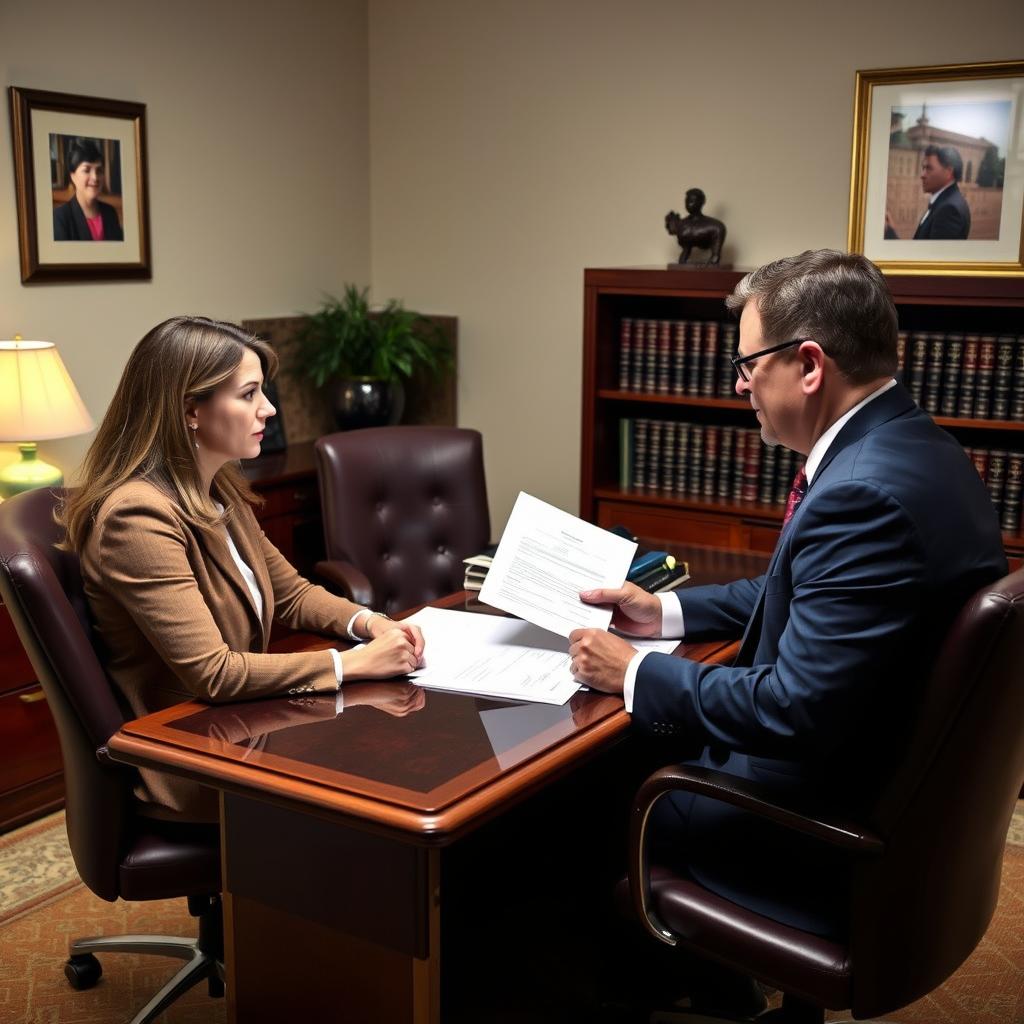
Felony Conviction Divorce Lawyer in Chesterfield County, Virginia
A felony conviction can be a fault ground for divorce in Virginia under Va. Code § 20-91, requiring at least one year of imprisonment. This adds significant complexity to property division, child custody, and support matters in Chesterfield County. A felony conviction divorce lawyer from the Law Offices Of SRIS, P.C.
Last verified: April 2026 | Chesterfield County Circuit Court | Virginia General Assembly
Divorce Law and Felony Convictions in Virginia
Virginia law explicitly lists a felony conviction resulting in confinement for one year or more as a fault-based ground for divorce. This is codified in Va. Code § 20-91. When a spouse files for divorce on this ground, the convicted spouse’s legal rights in the divorce—particularly regarding equitable distribution of marital property and spousal support—can be severely impacted. The court may consider the conviction and its financial consequences when dividing assets and determining support obligations.
In Chesterfield County, all divorce and equitable distribution cases are heard in the Chesterfield County Circuit Court, located at 9500 Courthouse Road. The court’s procedures and local rules must be carefully followed, especially when a case involves the added layer of a criminal conviction. The firm was founded in 1997 by former prosecutor Mr. Sris, whose background in accounting provides a distinct advantage in complex financial cases often arising in such divorces.
Official Legal Resources
For the official text of Virginia’s divorce statutes, refer to the Virginia General Assembly website. For local court forms and procedural information, visit the Chesterfield County Circuit Court website.
handling a Divorce After a Felony Conviction in Chesterfield County
A felony conviction introduces unique challenges in a Chesterfield County divorce. The filing spouse may use the conviction to argue for a more favorable property settlement or to limit the convicted spouse’s custody or visitation rights, alleging that the criminal behavior negatively impacts the children’s best interests. Prosecutors and family court judges may view the case through a lens of the convicted spouse’s perceived lack of responsibility.
- Initial Case Assessment: Disclose the full details of your conviction and sentence to your attorney. We analyze how it may be used against you in divorce proceedings.
- Gather Rehabilitation Evidence: Collect documentation of completed programs, steady employment, stable housing, and positive community involvement to demonstrate personal reform.
- Financial Disclosure & Analysis: Prepare a complete financial picture. A conviction can impact earning capacity, which affects support calculations and property division arguments.
- Develop a Custody Strategy: If children are involved, create a detailed parenting plan that addresses the court’s concerns and highlights your positive parental role.
- Negotiate or Litigate: We aim to negotiate a settlement that protects your rights. If necessary, we are prepared to litigate, presenting evidence to mitigate the impact of your past conviction.
Potential Consequences in Divorce
In Chesterfield County, a felony conviction can significantly influence a judge’s decisions on property division, spousal support, and child custody, often to the detriment of the convicted spouse.
| Divorce Aspect | Potential Impact of Felony Conviction |
|---|---|
| Equitable Distribution | Court may award a larger share of marital assets to the non-convicted spouse, especially if marital funds were used for legal defense or fines. |
| Spousal Support | Conviction can affect both the need for support (if incarcerated) and the ability to pay. The court may impute income or limit an award. |
| Child Custody & Visitation | The court must consider the conviction under the “best interests of the child” factors (Va. Code § 20-124.3), potentially restricting custody or ordering supervised visitation. |
| Parental Decision-Making | Legal custody (decision-making authority) may be granted solely to the other parent. |
Results may vary. Prior results do not guarantee a similar outcome.
Why Choose Our Firm for Your Divorce After a Felony Conviction
Founded in 1997, the Law Offices Of SRIS, P.C. brings over 120 years of combined legal experience to complex family law matters. Our tagline, “Advocacy Without Borders,” reflects our commitment to vigorous representation in difficult cases. Mr. Sris, the firm’s founder and a former prosecutor, personally amended Virginia’s equitable distribution statute (Va. Code § 20-107.3), giving us unparalleled insight into the property division issues central to your case. We understand how a criminal conviction divorce lawyer must build a defense that addresses both family law and the shadow of a criminal past.
Samantha Rae Powers, Associate Attorney at Law Offices Of SRIS, P.C. — Licensed in VA, FL. Experienced family law and civil litigator. View Samantha Rae Powers’s Profile
Case Results in Chesterfield County
Our firm has a documented record of favorable outcomes across various practice areas in Chesterfield County. For instance, we secured a nolle prosequi (dismissal) in a Chesterfield General District Court marijuana possession case. Results may vary. Prior results do not guarantee a similar outcome. In family law, our strategic approach is designed to protect parental rights and financial interests, even when a client faces an uphill battle due to a prior felony conviction. Mr. Sris, with his multi-state practice and background in accounting, provides strategic oversight on complex financial aspects that often arise in these divorces.
Contact Our Chesterfield County Felony Conviction Divorce Lawyers
Our Richmond location serves clients in Chesterfield County, providing accessible representation for matters at the Chesterfield County courts. We serve the communities of Midlothian, Chester, Colonial Heights area, Bon Air, Brandermill, and Moseley.
Law Offices Of SRIS, P.C. – Richmond
7400 Beaufont Springs Dr Suite 300 Room 359, Richmond, VA 23225
Toll-Free: (888) 437-7747 | Local: (804)201-9009
By appointment only. 24/7 phone consultations.
FAQs: Divorce After a Felony Conviction in Chesterfield County
Can my spouse get a divorce because of my felony conviction?
Yes. Under Va. Code § 20-91, a felony conviction resulting in confinement of one year or more is a specific fault ground for divorce in Virginia. Your spouse can file on this basis immediately after you have served one year, even if you are still incarcerated.
Will I lose custody of my children because of a felony?
It depends. The court decides custody based on the child’s best interests (Va. Code § 20-124.3). A felony conviction is a factor, but the court also considers the nature of the crime, its relation to parenting, time since conviction, evidence of rehabilitation, and the current parent-child relationship. Loss of custody is not automatic, but your rights may be restricted.
How does a felony affect property division in a Virginia divorce?
A felony conviction can negatively impact equitable distribution. If marital assets were depleted for legal fees or fines, or if the conviction harmed the family’s financial stability, the judge may award a larger share of the remaining marital property to the non-convicted spouse as part of a “fair” division under Va. Code § 20-107.3.
What should I look for in a criminal conviction divorce lawyer?
Seek a lawyer with specific experience in Virginia family law who understands how criminal records intersect with divorce. Look for a firm familiar with Chesterfield County Circuit Court procedures and one capable of presenting strong evidence of rehabilitation to mitigate the impact of your past on your future.
Can I get spousal support if I have a felony conviction?
It depends. The court considers multiple factors under Va. Code § 20-107.1. A conviction can affect both your need for support (e.g., if it limits employment) and the other spouse’s ability to pay. The judge has broad discretion, and a conviction is a significant negative factor in the analysis.