
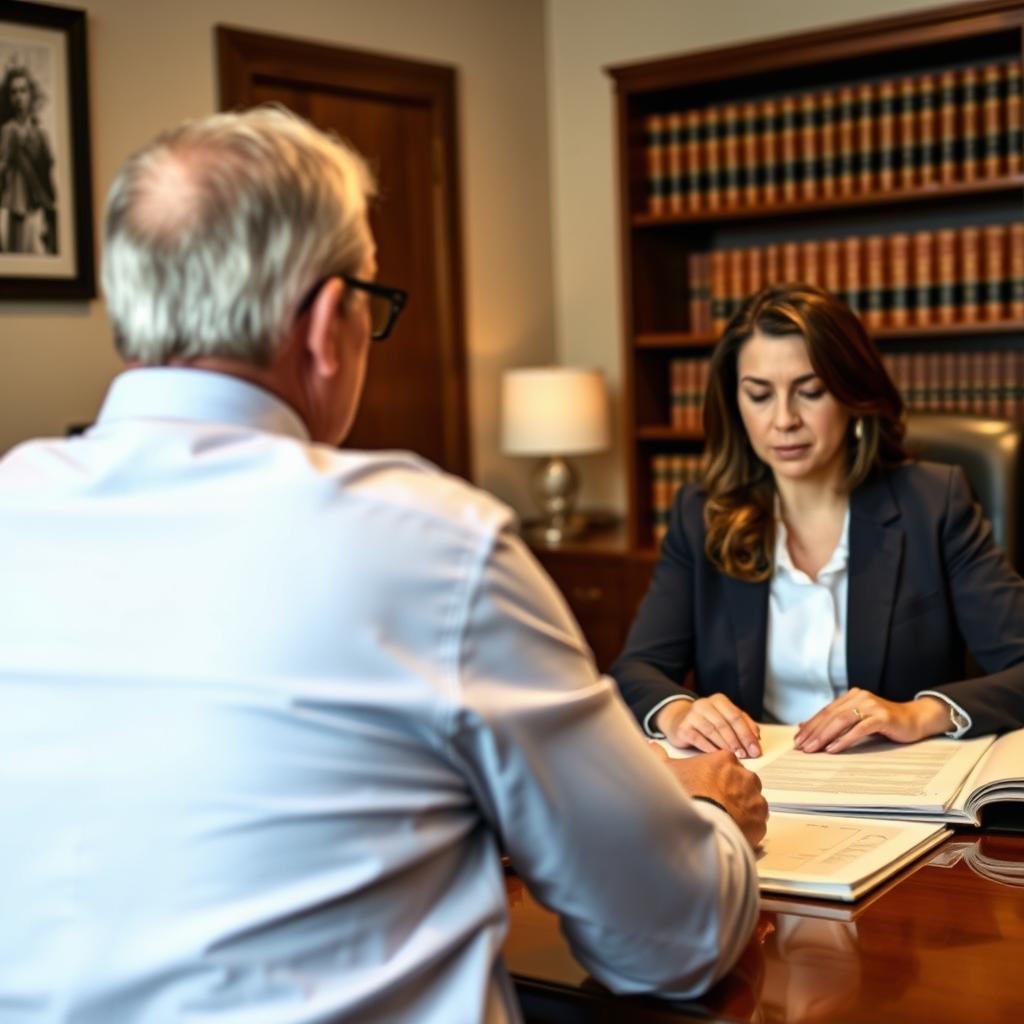
Fault Based Divorce Lawyer Dinwiddie County — What Are Your Grounds?
A fault-based divorce in Dinwiddie County requires proving specific grounds like adultery or cruelty under Va. Code § 20-91. This fault based divorce lawyer Dinwiddie County from Law Offices Of SRIS, P.C. has documented results in the Dinwiddie County Circuit Court. A fault divorce can impact spousal support and property division. We provide 24/7 consultations.
Virginia Fault Divorce Statute and Definition
Virginia law provides specific fault grounds for ending a marriage, distinct from a no-fault separation. A fault-based divorce requires you to prove one of the grounds defined in the Virginia Code. The statute governing fault grounds for divorce is Va. Code § 20-91. This law outlines the specific acts that constitute legal fault, including adultery, cruelty, desertion, and felony conviction. Proving these grounds requires presenting evidence to the Dinwiddie County Circuit Court. Successfully proving fault can influence the court’s decisions on alimony and the equitable distribution of marital property.
Last verified: April 2026 | Dinwiddie County Circuit Court | Virginia General Assembly
Official Legal Resources
For the full text of the law, refer to Va. Code § 20-91 (official Virginia General Assembly). All fault divorce cases in Dinwiddie County are filed at the Dinwiddie County Circuit Court.
Dinwiddie County Fault Divorce Process
Filing a fault-based divorce in Dinwiddie County involves a distinct legal process focused on evidence. The key procedural fact is that you, as the plaintiff, bear the burden of proving the alleged fault ground by clear and convincing evidence. This is a higher standard than in many civil cases. The Dinwiddie County Circuit Court will not grant a fault divorce based on allegations alone.
- Consult with a fault based divorce lawyer Dinwiddie County to evaluate the strength of your evidence and whether filing on fault grounds is strategically advisable for your situation.
- Gather and organize evidence to support your claim, which may include documents, communications, witness statements, or other corroborating proof.
- File a Complaint for Divorce with the Dinwiddie County Circuit Court clerk, specifically alleging the fault ground and providing a factual basis.
- Serve the complaint on your spouse according to Virginia rules, initiating the formal legal process.
- Proceed through discovery and pre-trial hearings, where evidence is exchanged and motions are argued.
- Present your case at trial if a settlement is not reached, where you must prove the fault ground to the judge’s satisfaction.
Fault Grounds and Potential Outcomes
In Dinwiddie County, proving fault in a divorce can affect spousal support awards and, in some cases, the division of marital assets.
| Fault Ground | Legal Definition (Va. Code § 20-91) | Key Evidence Considerations | Potential Impact on Divorce |
|---|---|---|---|
| Adultery | Voluntary sexual intercourse by either spouse with someone other than the other spouse. | Direct evidence is rare; often relies on circumstantial evidence, admissions, or cohabitation. | Can bar the adulterous spouse from receiving spousal support; may influence property division. |
| Cruelty | Reasonable apprehension of bodily hurt, or willful conduct that endangers mental or physical health. | Medical records, police reports, witness testimony, photos of injuries, documented threats. | Fault finding can support a larger spousal support award to the injured spouse. |
| Willful Desertion | Voluntary separation by one spouse with intent to desert, continuing for one year or more. | Proof of intent to end cohabitation, lack of consent, and continuous one-year period. | Deserting spouse may be barred from spousal support; can establish grounds without waiting period. |
| Felony Conviction | Conviction of a felony, sentence to confinement for more than one year, and cohabitation not resumed after release. | Certified copy of conviction and sentencing order. | Provides a clear fault ground; can affect support and custody considerations. |
Results may vary. Prior results do not guarantee a similar outcome.
Why Choose Our Firm for Your Fault Divorce
Founded in 1997 by former prosecutor Mr. Sris, Law Offices Of SRIS, P.C. brings over 120 years of combined legal experience to complex family law matters. Our firm-wide record includes 4,739+ case results. Mr. Sris personally amended Virginia’s equitable distribution statute, Va. Code § 20-107.3, giving our team deep insight into how fault can influence property division rulings in Virginia courts.
Case Experience in Dinwiddie County
Our firm has secured favorable outcomes for clients in Dinwiddie County courts. For instance, we have successfully negotiated reductions in serious traffic charges in the Dinwiddie County General District Court, demonstrating our familiarity with local court procedures and personnel. Results may vary. Prior results do not guarantee a similar outcome. Firm founder Mr. Sris, a former prosecutor with multi-state bar admissions, provides oversight on complex fault divorce strategies, ensuring a thorough approach to evidence presentation.
Contact Our Dinwiddie County Fault Divorce Lawyers
Our Richmond location serves clients at the Dinwiddie County courts (Dinwiddie Courthouse). We represent individuals in Dinwiddie and McKenney.
Law Offices Of SRIS, P.C. — Richmond
7400 Beaufont Springs Dr Suite 300 Room 359, Richmond, VA 23225, United States
Toll-Free: (888) 437-7747 | Local: (804)201-9009
By appointment only. 24/7 phone consultations.
Fault Based Divorce in Dinwiddie County: FAQs
What are the fault grounds for divorce in Virginia?
Yes. Virginia’s fault grounds for divorce are adultery, cruelty, willful desertion for one year, and felony conviction with imprisonment. These are defined in Va. Code § 20-91. An at-fault divorce lawyer Dinwiddie County can advise if your situation meets the legal standard for one of these grounds.
How does proving fault affect a divorce in Dinwiddie County?
It depends. Proving fault can influence spousal support (alimony) and, in some cases, the equitable division of property. For example, a spouse found guilty of adultery may be barred from receiving spousal support. The Dinwiddie County Circuit Court judge has discretion in applying fault to the final decree.
Is it harder to get a fault-based divorce than a no-fault divorce?
Yes. A fault-based divorce requires you to prove specific misconduct in court by clear and convincing evidence, which involves a trial or evidentiary hearing. A no-fault divorce based on separation requires only proof of the separation period, which is often simpler to document.
What evidence is needed for a cruelty divorce in Virginia?
Evidence can include medical records for physical or mental health treatment, police reports for domestic violence, photographs of injuries, threatening communications (texts, emails), and witness testimony. The conduct must create a reasonable apprehension of bodily harm or endanger health.
Can I file for divorce immediately on grounds of adultery?
Yes. Unlike a no-fault divorce which requires a waiting period, you can file for divorce immediately if you have grounds to prove adultery. There is no mandatory separation period. However, you must be prepared to prove the adultery occurred.
How long does a contested fault divorce take in Dinwiddie County?
A contested fault divorce typically takes 9 to 18 months from filing to final decree in Dinwiddie County Circuit Court. Complex cases with extensive discovery and evidentiary disputes can take longer, potentially 12-24 months. Timelines depend on court scheduling and case complexity.
Related Legal Help in Dinwiddie County
If you are dealing with family legal issues, you may also need information on: Virginia Family Law Lawyer, Chesterfield County Family Law Lawyer, or Dinwiddie County Criminal Defense Lawyer.
Page last verified and updated: April 2026. Laws change — contact Law Offices Of SRIS, P.C. at (888) 437-7747 for current guidance.