
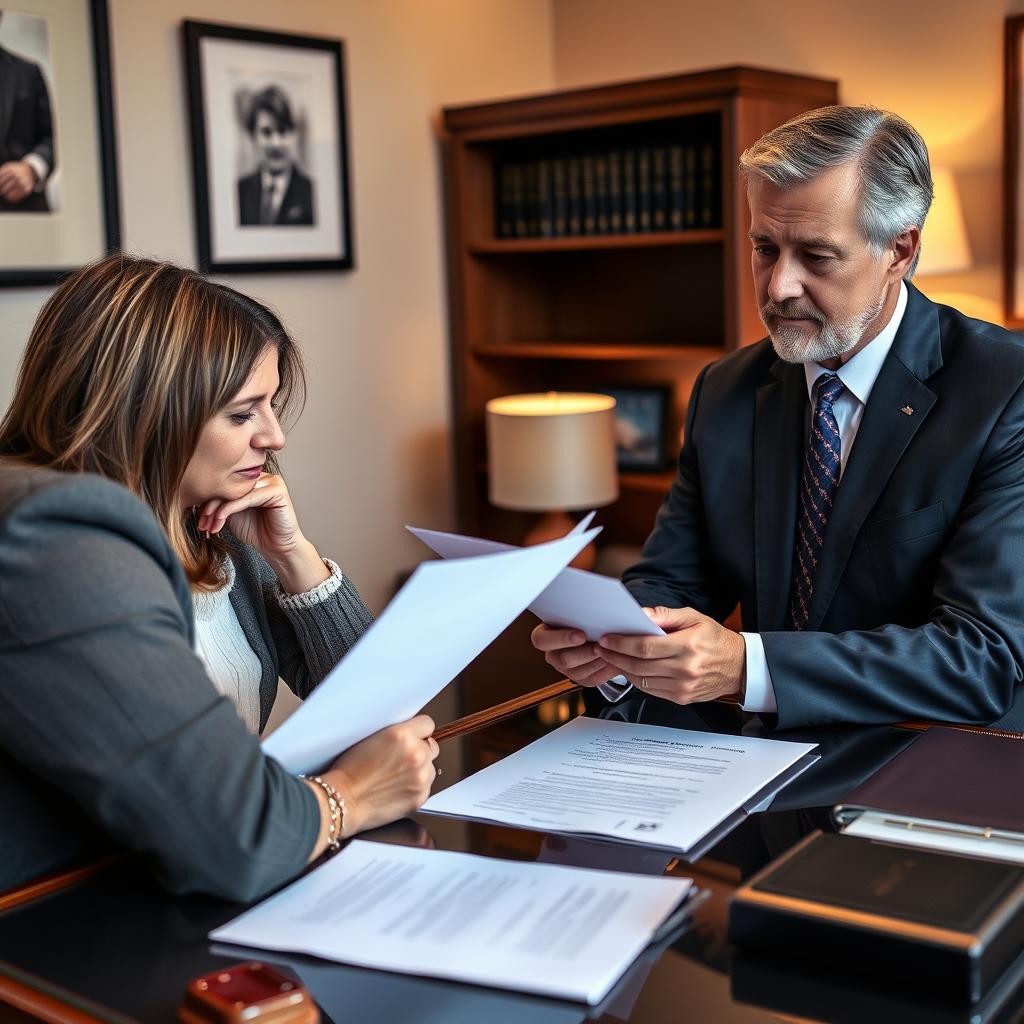
Adultery Divorce Lawyer in Louisa County, Virginia — What Are Your Options?
Adultery is a fault-based ground for divorce in Virginia under Va. Code § 20-91, requiring clear proof of the extramarital relationship. An experienced adultery divorce lawyer Louisa County can handle the Louisa County Circuit Court process, where proving infidelity can impact property division and spousal support. Law Offices Of SRIS, P.C. provides case-specific representation for these sensitive matters. Contact us for a confidential consultation.
Virginia Law on Adultery as a Ground for Divorce
In Virginia, adultery is a statutory fault ground for divorce, defined as voluntary sexual intercourse between a married person and someone other than their spouse. Unlike a no-fault divorce based on separation, an adultery divorce in Louisa County has no mandatory waiting period. However, the accusing spouse (the plaintiff) bears the burden of proving the adultery occurred. Proof must be clear, convincing, and corroborated, meaning it cannot rest solely on the plaintiff’s testimony. The court at 100 West Main Street in Louisa applies this standard strictly.
Last verified: April 2026 | Louisa County Circuit Court | Virginia General Assembly
Official Legal Resources
- Va. Code § 20-91 (official Virginia General Assembly) – Lists adultery as a fault ground for divorce.
- Louisa County Circuit Court – Official court website for filing divorce cases.
Local Process for an Adultery Divorce Case in Louisa County
Filing for divorce on grounds of infidelity in Louisa County follows a specific fault-based procedure. The process begins with filing a Complaint for Divorce in the Louisa County Circuit Court, specifically alleging adultery. Because this is a fault ground, the case can proceed immediately without a separation period. Evidence gathering is critical and often involves subpoenas for records, witness testimony, or other documentation. The accused spouse may raise defenses, such as condonation (forgiveness) or recrimination (plaintiff also committed adultery).
- Consult with an Attorney: Discuss the specifics of your case, the evidence available, and the implications of pursuing a fault-based divorce.
- File the Complaint: Your lawyer files the Complaint for Divorce alleging adultery at the Louisa County Circuit Court clerk’s office.
- Serve the Defendant: The complaint is formally served on your spouse, who then has 21 days to file an Answer.
- Discovery & Evidence Presentation: Both sides exchange information. Your attorney will methodically prepare and present corroborated evidence of the adultery to the court.
- Court Hearing or Settlement: The case may proceed to a hearing where a judge rules on the fault ground, or the parties may reach a settlement agreement resolving all issues.
Potential Impacts of an Adultery Finding
In Louisa County, a court finding of adultery can influence spousal support awards and the equitable division of marital property under Va. Code § 20-107.3.
| Legal Area | Potential Impact of Adultery |
|---|---|
| Spousal Support | The adulterous spouse may be barred from receiving support or may receive a reduced award. |
| Property Division | The court may consider marital funds spent on the affair when dividing assets, potentially awarding a larger share to the innocent spouse. |
| Custody & Visitation | Generally, adultery alone does not affect custody unless it directly harmed the child or impaired parenting. |
| Divorce Timeline | No required separation period, potentially allowing a faster divorce decree than a no-fault filing. |
Results may vary. Prior results do not guarantee a similar outcome.
Why Choose Our Firm for Your Louisa County Adultery Divorce Case
Founded in 1997 by former prosecutor Mr. Sris, Law Offices Of SRIS, P.C. brings over 120 years of combined legal experience to complex family law matters. Our firm-wide record includes 4,739+ case results with a 93%+ favorable outcome rate. Mr. Sris personally amended Virginia’s equitable distribution statute, Va. Code § 20-107.3, giving our team deep, firsthand knowledge of the law governing property division in divorce cases, including those involving fault grounds like infidelity.
Samantha Rae Powers, Associate Attorney at Law Offices Of SRIS, P.C. — Licensed in VA, FL. Experienced family law and civil litigator. View Samantha Rae Powers’s Profile
Documented Case Results in Virginia
Our firm has a documented history of achieving favorable outcomes in family law and other practice areas across Virginia. In Louisa County, we have 30 total documented case results across all practice areas with an 87% favorable outcome rate. Results may vary. Prior results do not guarantee a similar outcome.
Our secondary attorney on complex family law matters is Mr. Sris, the firm’s founder and a former prosecutor who personally amended Virginia’s equitable distribution statute, bringing invaluable high-level insight to case strategy.
Contact Our Louisa County Adultery Divorce Lawyers
Law Offices Of SRIS, P.C.
7400 Beaufont Springs Dr, Ste 300, Rm 395
Richmond, VA 23225
Toll-Free: (888) 437-7747 | Local: (804)201-9009
By appointment only. 24/7 phone consultations.
Our Richmond location serves clients in Louisa County and the surrounding communities of Louisa, Mineral, and Zion Crossroads. We are accessible via I-64 and represent clients at the Louisa County courts.
Adultery Divorce in Louisa County: Frequently Asked Questions
How do I prove adultery in a Louisa County divorce?
It depends. Proof must be clear, convincing, and corroborated. Evidence can include photographs, communications, witness testimony, travel records, or admissions. An infidelity divorce grounds lawyer Louisa County can help identify and gather admissible evidence to meet the court’s standard, as circumstantial evidence alone is often insufficient.
Does adultery affect child custody in Virginia?
Not directly. Custody is decided based on the child’s best interests under Va. Code § 20-124.3. Adultery typically doesn’t matter unless it demonstrates a pattern of behavior that harms the child or significantly impairs the parent’s ability to provide care.
Can I get a divorce for adultery if I also cheated?
It depends. Virginia recognizes the defense of “recrimination,” where the accused spouse proves the plaintiff also committed adultery. If proven, the court may deny the divorce on adultery grounds, potentially requiring you to use another fault ground or a no-fault separation period. Consulting a cheating spouse divorce lawyer Louisa County is crucial to assess your specific situation.
How long does an adultery divorce take in Louisa County?
An adultery divorce has no mandatory waiting period, so it can be faster than a no-fault divorce. However, the timeline depends on case complexity, evidence gathering, court scheduling, and whether the adultery is contested. An uncontested adultery divorce may finalize in a few months, while a contested case can take much longer.
What is the difference between adultery and cruelty as divorce grounds?
Adultery involves sexual infidelity. Cruelty involves physical or mental harm that makes cohabitation unsafe. Both are fault grounds with no waiting period, but the required evidence differs. An experienced adultery divorce lawyer Louisa County can advise on which ground is most appropriate based on your circumstances.
Related Legal Information
If you are facing a divorce in Louisa County, you may also need information on Virginia family law. For other legal needs in the area, consider our pages on Louisa County criminal defense or Louisa County DUI defense. For similar family law help nearby, see our pages for Henrico County family law and Chesterfield County family law.
Page last verified and updated: April 2026. Laws change. Contact Law Offices Of SRIS, P.C. at (888) 437-7747 for current legal guidance.